By Chelsey Smith
•
October 23, 2026
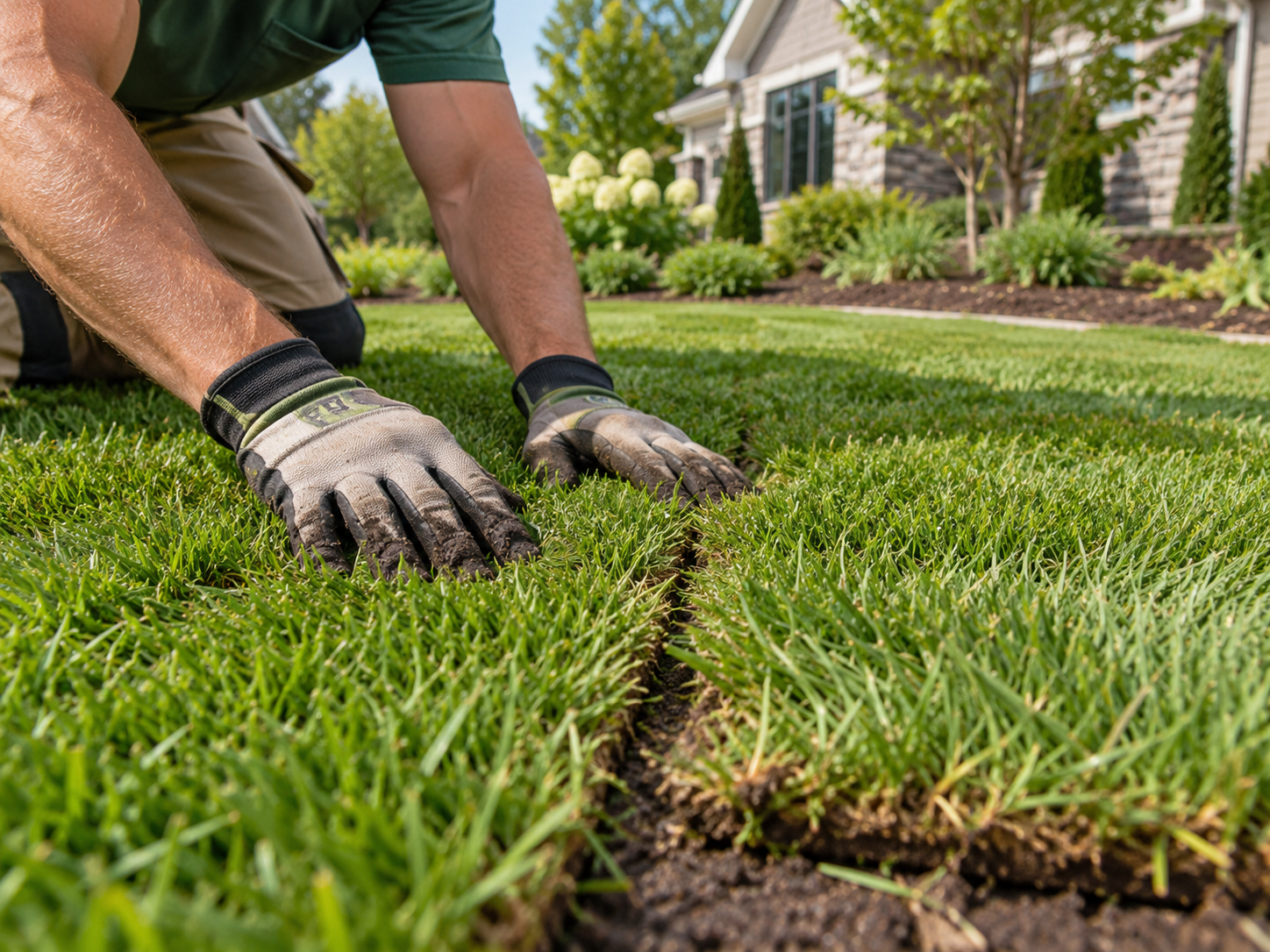
Visible joins can be part of the appearance of newly laid sod, but open or widening gaps deserve attention. After sod installation, we want adjacent pieces fitted together with suitable soil contact. If edges pull apart, curl or dry, the next step is to review moisture, contact and disturbance rather than assume every seam is harmless. At Monarch Landscaping, we would rather hear about a changing gap early than have a homeowner try several repairs without knowing the cause. A Cambridge lawn can look different as light, moisture and growth change, so photographs and the pattern across the yard help us understand what needs checking. This guide explains what to observe and how to report it clearly. Distinguish a visible join from an open gap Sod is installed in separate pieces, so the lines between them may remain noticeable at first. A change in blade direction or shade can make the join visible even when the edges meet. That is different from a space exposing soil between pieces. Look at the join from a normal standing position and, if needed, take a closer photograph without pulling the turf apart. Note whether the pieces touch, whether an edge is raised and whether the line has become wider since installation. Those details are more useful than the word “seam” alone. We would not promise that every visible line disappears on the same schedule. Growth and establishment depend on conditions. The important distinction is between an appearance that is settling in and a physical gap or change that needs review. Check the pattern across the lawn One short gap near a curved bed may have a different explanation from joins opening throughout the yard. Record where the issue occurs and whether it is concentrated beside paving, in exposed areas or along a frequently used route. A broad photo helps show that pattern. Include a fixed feature such as a path or fence so we can locate the section. Then add a close view of the gap. If you can show scale without stepping on loose turf, include a small familiar object beside the area rather than inserting anything under the sod. Our Cambridge sod installation service is the starting point for planning and assessment. If we installed the lawn, tell us when you noticed the change and what care or activity has occurred since handover. Review moisture and drying at the edges Drying can contribute to shrinkage and stressed edges. A lawn may receive water in the centre while narrow strips beside paving or fences remain less evenly covered. Check the sprinkler pattern and the actual condition of the affected area rather than assume the whole lawn receives the same treatment. At the same time, do not respond to every gap by adding unlimited water. Saturated ground and runoff do not improve the situation simply because a seam is visible. We need to understand whether the turf and prepared soil are dry, suitably moist or excessively wet. Avoid judging by colour alone Grass colour can change for several reasons. A green surface does not prove the soil beneath it has appropriate moisture, and a discoloured edge does not identify the cause by itself. Describe the moisture observations and the physical condition of the join together. Use the checks described in your aftercare plan, with minimal disturbance. Repeatedly lifting or peeling the same edges can interrupt contact and anchoring. If you are unsure how to inspect the lawn, ask before turning an observation into a repair. Consider soil contact and surface levels The underside of the turf needs contact with the prepared growing surface. A raised edge, uneven base or disturbed piece may create a gap beneath part of the sod even when the top looks close to its neighbour. That condition needs assessment. We would examine whether the problem relates to local fitting, preparation, drying or movement. Those possibilities do not all call for the same response. Pressing, filling or re-laying without understanding the issue can conceal the symptom while leaving the cause. Our sod installation options explain why preparation is part of the lawn project. Good finishing depends on the base as well as the visible placement of the rolls. A new surface cannot correct every underlying level or moisture problem by itself.